Field guide · Sourcing
Shenzhen EV Sourcing Playbook
Find, vet and buy from Chinese EV charger, storage and power-technology factories.
EV Ecosystem Library · Reference · Charger brands
OEM, ODM, approvals and after-sales in ten regions. Putting your own name on a charger looks like a marketing decision. It is really a decision about what you own and what you will answer for, often for ten years after the sale. The certificate is in the factory's name: is that a problem? Who owns the firmware if you leave this factory? Six per cent of last year's chargers failed: who pays for that? This plain-language reference answers them for a brand owner anywhere, with every rule and figure dated and sourced. The live ten-region tables, templates and launch plan are gathered in a free Charger Brand Builder Kit, updated as the rules are checked.
Look inside
Who it's for
You have bought or sold chargers. You may not yet know what an ODM contract should say about firmware source code, why the certificate should be in your own name, or what "manufacturer" means in law when you only put a logo on the box. By the end of the book you will. It is not written for drivers or for engineers designing power electronics from scratch, and it is not legal, tax, customs, certification or financial advice.
Who want their own name on the chargers they sell, and need to know what that name makes them answer for.
Installers and electrical contractors moving into product, and charge point operators, utilities and energy, solar and storage companies that want a house-brand charger.
With the volume to want their own model, their own warranty terms and their own after-sales.
Backing a new charger brand, or already buying from an OEM or ODM maker and wanting to do it better.
What's inside
Plus the ten-region brand tables, the spec, contract and inspection checklists in print, a standards and rules index, the acronyms and the own-brand terms. Every product and every route: AC chargers for homes and commercial sites, DC fast and ultra-fast chargers, portable chargers and chargers for two- and three-wheelers, from white label to your own design built by a contract manufacturer. Ten regions, always in alphabetical order so none is ranked first: Africa, Australia and New Zealand, China, the European Union, India, Latin America, the Middle East, North America, Southeast Asia and the United Kingdom. Every rule, standard and figure is dated and sourced, and the sources page has the full links. Where no official source was found, the book says so instead of guessing.
Six routes on one spectrum, from white label to own design, the ten things a brand can own, three things left with the factory without anyone noticing, where chargers are made, who the law sees, registrations before you sell, and your ownership map.
What a brand adds and what it carries, the money side as a pattern, when a brand or a maker exits, consumer warranty law as a cost you carry, duties from the moment the name changes, the distributor test, the light start and the brand decision sheet.
Each product type in one paragraph, one family built from a platform, variants and SKUs, product standards by region, battery products under your name, and the product family planner.
Brief first, spec second: the one-page buyer brief, the spec in eight blocks, must, should and won't, the region lines, freezing and revising the spec, and the common spec mistakes.
Where the makers are, a long list from more than one source, the twelve brand rows to score them on, checking every certificate claim yourself, and one maker with one reserve.
Reading the price stack in a quote, paying for engineering and tooling and then owning them, MOQ as a negotiation about risk, payment and deposits, exclusivity you can earn, landed and fully loaded cost, and duties as patterns.
The twelve clause groups: trademark, firmware, source and keys, test reports and the technical file, change control, golden sample and inspection, back-to-back warranty, liability and recall costs, governing law, and an exit that keeps the brand.
The software stack, who owns, builds, signs and updates the firmware, over-the-air updates, OCPP and its certificate, ISO 15118 and Plug and Charge, the rules that make the brand responsible, data, three app models and the support period.
Why the name on the box usually makes you the manufacturer in law, region by region, then incidents and recalls, take-back, the duty-holder sheet and the technical file.
Holding the certificates as brand strategy, the CB Scheme, approvals in each region, OCPP certificates for the branded model, brand variants and families, the certificate register and the change ladder.
The label as a legal document, marks by market, whose name and address, languages, take-back symbols, the manual, QR codes and digital information, packaging and the artwork check.
The batch loop, golden samples and inspection, the incoming specification, first article inspection, sampling by a named standard, the pre-shipment checklist, field failure data, the change trigger, border checks and recalls.
The legal guarantee and the warranty you offer, terms you can keep, the warranty as a reserve, one flow for every claim, spares in the right places, three tiers of support, recovering the factory's share, and when a maker or a brand leaves.
The price ladder, choosing channels, public tenders and domestic content, selling online, channel terms within competition law, what you add that the factory's other customers do not, and when the factory sells the same charger to your competitor.
When to add a second factory, qualifying it, two factories making one model, what a new factory does to each approval, building outside China, new models on the family platform, new markets, changing a maker and when to stop.
Africa, Australia and New Zealand, China, the European Union, India, Latin America, the Middle East, North America, Southeast Asia and the United Kingdom, each on the same layout, then the ten side by side.
Four quarters and three gates, from deciding and specifying to the first batch and launch, the risk register, recurring duties by region, the one-page board summary, keeping the plan current and when to call whom.
Appendix A: the twelve at-a-glance rows from Chapter 16, one row per region.
Appendix B: the buyer brief and spec headings, the contract clause groups and the twenty lines that matter most, the firmware exit test, the change ladder, the batch inspection checklist and the returns flow.
Appendix C: every standard, rule and programme named, with its edition or date at the time of writing.
Appendices D and E: the acronyms, and the own-brand terms this book adds to the library glossary.
Free Charger Brand Builder Kit
The book gives the method and dated examples. The Kit turns the method into your own ownership map, spec, contract checklist and launch plan, and keeps the fastest-changing rules for ten regions current, in one place. It's free for readers: one spreadsheet and one printable PDF. Enter your email and the download links appear right away.
The links are private and expire after one hour. Come back and submit the form again any time for fresh links. You'll hear by email when the Kit is updated.
Rules, duties, fees and deadlines change often. Confirm the current position with the regulator, your certification body and your advisers before you place a product on the market or sign a contract. The Kit is for information, not legal, tax, customs, certification or financial advice, and its worked costs, margins and reserves are illustrative, never targets. The book's sources, with full links, are on the Notes and Sources page.
Editions
About the author
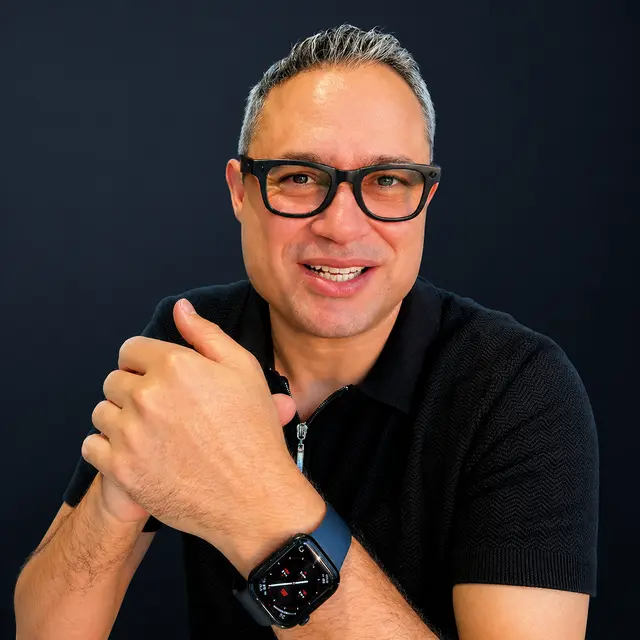
Yasser Ayed is an entrepreneur and the founder of KEEL, an EV charging infrastructure company operating across the Middle East. Based in Shenzhen, China, he works at the intersection of technology, manufacturing and the Middle East. He has more than 15 years of experience building businesses across the UAE, the United States and China. He writes the EV Ecosystem Library, practical field guides for people who buy, build and invest in electric mobility, starting with the Shenzhen EV Sourcing Playbook and The Business of EV Charging.
EV Ecosystem Library
Each book stands on its own. Together they take you from the show floor and the factory to a charging site that pays back.
Field guide · Sourcing
Find, vet and buy from Chinese EV charger, storage and power-technology factories.
Field guide · EV charging
How charging sites make money, where they lose it, and whether to invest.
Field guide · Trade shows
Choose the right shows, work the floor and come home with a supplier shortlist.
Business guide · China EV
How China builds electric mobility and how its brands are going global.
Practical guide · Property charging
Add chargers to apartment buildings, offices, hotels and retail sites, anywhere in the world, without being sold to.
Business reference · Batteries
Read a battery datasheet, compare warranties, check the safety proof and buy EV and storage batteries from China safely.
Reference · Charging standards
Connectors, power levels, standards and networks in plain language, with every standard named by number and ten regions compared.
Reference · Certification
The marks, tests and approvals chargers and batteries need in ten regions, how one CB report can serve many markets, and how to check a certificate.
Reference · Fleets
Which vehicles to switch first, a total cost of ownership your finance team trusts, depot charging and the grid connection, in ten regions.
Reference · Networks
Keep every charger working, paid for and reported: uptime, the CPMS, field service, prices, payments, roaming and reporting, in ten regions.
Reference · Installers
Run the business side of charger installation: licences, survey and quote, pricing, crews, the utility, contracts, SLAs and cash, in ten regions.
Building Your Own EV Charger BrandPDF + Charger Brand Builder Kit, instant download
Buy · $15